A Development and Land Use Application may need to be submitted for any proposed development within Colwood so the proposal can be reviewed against the City’s plans, polices, and bylaws. Use the links below to learn more about the different types of Development and Land Use applications.
Types of Development and Land Use Applications
Every property in Colwood has a land use designation(s) that is outlined in the OCP Bylaw No.1700. To find out the land use designation of your property, check out our online mapping system.
This type of application is required when a proposed development does not conform to the land use designation in the OCP. An amendment is the process of legally changing the land use designation on a property through an amending bylaw.
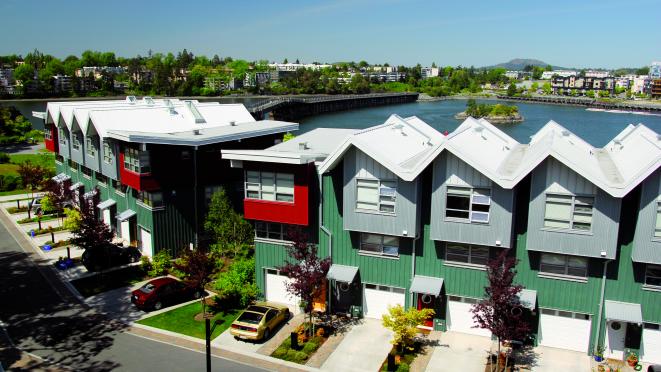
When Council assesses new development proposals, they are required to determine whether the project is consistent with the OCP. This is done by considering the proposal based on its designation in the OCP, and through an OCP policy assessment that is done by Planning staff. Amendments to the OCP are carefully assessed, as each new proposal should help contribute to the community achieving its visions and goals.
OCP Amendment and Rezoning applications are approved by Council in accordance with Part 14, Division 5 of the Local Government Act.
The full OCP Amendment and Rezoning process is outlined in the diagram below. Once you are ready to apply, ensure you have completed the OCP Amendment/Rezoning Application Checklist, [PDF/269KB] and submit the online Development and Land Use Application form.

Every property in Colwood has a zoning classification that is outlined in the Land Use Bylaw No. 151. To find out the zoning classification of your property, check out our online mapping system.
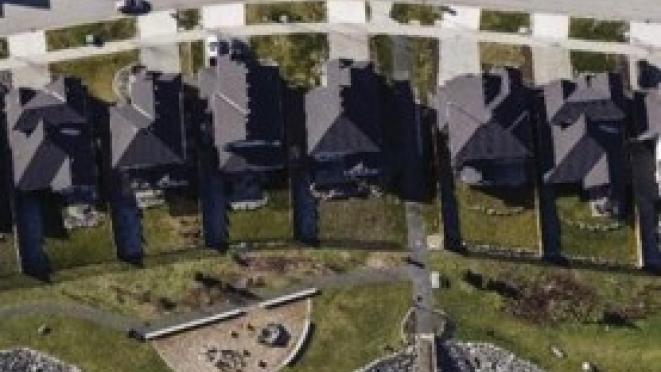
A Rezoning Application is an application to amend the Land Use Bylaw. While conditions such as building setbacks or height can be varied through a Development Variance Permit (DVP), changing the permitted uses or allowable density in a particular zone requires a change to the Land Use Bylaw through a rezoning application. If your intention is to use your property for a use not currently permitted under the existing zoning you will need to apply to change it.
The purpose of rezoning is to change land use regulations to allow development that aligns with Council priorities and is often used to secure development contributions to help provide public amenities.
OCP Amendment and Rezoning applications are approved by Council in accordance with Part 14, Division 5 of the Local Government Act.
The full OCP Amendment and Rezoning process is outlined in the diagram below. Once you are ready to apply, ensure you have completed the OCP Amendment/Rezoning Application Checklist, [PDF/269KB] and submit the online Development and Land Use Application form.

What is Subdivision?

Subdivision is the process of dividing existing parcels into new parcels or changing existing property boundaries. If you would like to divide your land into two or more plots of land, you will need to complete a subdivision application. In addition to these more common examples, there are other forms of subdivisions, and we recommend that you consult with Development Services staff to discuss. Please refer to the Development and Land Use Application Form and the Subdivision checklists to determine the minimum submission requirements.
Subdivision can include:

Cost of Subdivision
There are significant costs to subdividing lands - the upgrades and changes needed to accommodate new development have related demands on road, water, sanitary, and storm water systems. Please refer to the Fees and Charges Bylaw No. 1603.
Role of the Approving Officer
All subdivisions must receive the approval of the Approving Officer (AO). The Approving Officer is a statutory official with separate and independent jurisdiction from the local government (Mayor and City Council). The Approving Officer is appointed under the Land Title Act and by the Strata Property Act, to make decisions and exercise discretionary powers with respect to the subdivision of land. Authority to approve or deny a subdivision application is at the sole discretion of the Approving Officer through Provincial Legislation and contained in the City of Colwood Subdivision and Servicing Bylaw as well as several key provincial statutes. It is the responsibility of the Approving Officer to ensure that subdivisions are in accordance with Provincial statues, regulations and local government bylaws regulating subdivision and zoning.
The review and approval process for subdivisions is necessary to ensure that all statutory and City Bylaw requirements are addressed including but not limited to:

- Size and shape of lots/buildable area;
- Roads, lanes and emergency vehicles access;
- Parks, open space and walkways;
- Preservation of natural features (ravines, streams, trees, etc.);
- Compatibility of subdivision pattern with surrounding neighbourhood;
- Sanitary sewer, water, drainage, street lights and other services; and,
- Municipal infrastructure such as protection of opportunity for future development for lands adjacent to or beyond the lands being subdivided
Subdivision Process
Once a completed preliminary subdivision application is received, it will be reviewed by internal departments and external agencies before a Preliminary Layout Assessment (PLA) is issued. This letter provides a preliminary list of technical requirements to be completed before final approval of the subdivision. You may also be asked to submit additional information or revise the proposal as a result of this review.
A typical PLA is issued within 3-4 months, though the process for more complex proposals will take longer. To address the PLA you may be required to submit civil engineering plans, enter into a Servicing Agreement, and other legal documents. It typically takes 12 months to satisfy the requirements of the PLA before the application is ready for consideration of approval. The timing of final subdivision approval may be affected if your subdivision application also requires other development approval processes, such as a Development Permit or Development Variance Permit.
The full Subdivision process is outlined in the diagram below. Once you are ready to apply, ensure you have completed the relevant Subdivision Application Checklist, and submit the online Development and Land Use Application form.


What is a Development Permit?
A Development Permit (DP) is a land use permit used by local governments to review proposed developments to ensure they meet the policies and objectives of the Official Community Plan (OCP) Bylaw No. 1700, and satisfy all required regulations in the Land Use Bylaw No. 151 and Off-Street Parking Bylaw No. 1909.
What is a Development Permit Area?
Development Permit Areas (DPAs) are identified in the OCP and need special treatment for certain purposes, including the protection of the natural environment and the protection of development from hazards. These areas are also identified to establish objectives for the form and character of Colwood.
When is a Development Permit Required?
For properties located within a DPA, a Development Permit (DP) is required prior to the issuance of a building permit, or completion of a subdivision. A DP may also be required prior to any site disturbance on your property, including the clearing of land. If your property is located within multiple DPA’s, you only need to submit one application.
Refer to the figures in Section 18 of the OCP to find out if your property is located in a DPA. Alternatively, call 250.294.8153 or email planning@colwood.ca to speak with staff.
Development Permit Approval Process
Development permits are approved by the Director of Development Services. The full DP process is outlined in the diagram below. Once you are ready to apply, ensure you have completed the Application Checklist for a Form and Character DP [PDF/204KB] [PDF/199KB] and/or Environmental DP [PDF/214KB] [PDF/211KB], and submit the online Development and Land Use Application form.

What is a Development Variance Permit?

A Development Variance Permit (DVP) is a land use permit used by local governments to ‘vary’ or relax a regulation. Examples of regulations that may be varied include building setbacks, height, size, or site coverage.
When is a Development Variance Permit required?
If your proposed development does not conform to the zoning regulations, a DVP may be a potential path forward. DVPs cannot vary land use (e.g., single family home to apartments) or density (e.g., floor area ratio), but can vary the siting, size, or height. Keep in mind that the approval of DVP applications is discretionary, so having a strong rationale in favor of the request demonstrating support from various City’s Official Community Plan (OCP) policies is mandatory for Committee and Council consideration.
Things to consider before you apply:
- Exhaust all options by trying to meet bylaw requirements before resorting to a DVP application.
- Speak to your neighbors regarding your plans.
- If you are in a strata, talk to your strata council.
- Be prepared to pay additional advertising costs (e.g., signage and notification).

Development Variance Permit Process
The full DVP process is outlined in the diagram below. Once you are ready to apply, ensure you have completed the DVP Application Checklist, and submit the online Development and Land Use Application form.

What is the Board of Variance?
The Board of Variance (BOV) is an independent board regulated by the BOV Bylaw No. 1747. The BOV consists of three volunteer members of the public who have been appointed by Council. The BOV reviews applications and makes decisions on minor variances to the Land Use Bylaw No. 151 when it is illustrated by the applicant that compliance would cause undue hardship.
What does ‘minor variance’ and ‘undue hardship’ mean?
A minor variance is determined by the BOV in its decision-making and relates to the specific circumstances of the request. Typically, undue hardship results from site and/or building aspects (e.g., irregular shaped lot, slope, natural features, historic siting), as opposed to personal circumstances. It is the applicant’s responsibility to clearly state in writing the basis for the appeal in their application submission and demonstrate the request is minor and the hardship that would result from full compliance.
Can I appeal the Board of Variance decision?
No. All decisions by the BOV are final and the applicant may not submit again with a similar proposal at a later date. The applicant may wish to apply for a Development Variance Permit.

Board of Variance Process
Board of Variance applications are approved through the Board of Variance in accordance with Part 14, Division 15 of the Local Government Act.
The full BOV process is outlined in the diagram below. Once you are ready to apply, ensure you have completed the BOV Application Checklist [PDF/233KB], and submit the online Development and Land Use Application form.

What is a Temporary Use Permit?

A Temporary Use Permit (TUP) is an approval from Council for a temporary land use that does not conform to the Land Use Bylaw No. 151. A TUP may be issued for up to 3 years and can only be renewed once by Council for an additional 3 years.
What does a Temporary Use Permit do?
A TUP may do one or more of the following:
- Allow a temporary use not permitted by the Land Use Bylaw
- Specify conditions under which the use may be carried on
- Allow and regulate the construction of buildings or structures in respect of the use for which the permit is issued
Who can apply for a Temporary Use Permit?
A property owner or agent having written authorization from the property owner may submit an application.
Temporary Use Permit Approval Process
Temporary Use Permit applications are approved by Council in accordance with Part 14, Division 8 of the Local Government Act.
The full TUP process is outlined in the diagram below. Once you are ready to apply, ensure you have completed the TUP Application Checklist [PDF/216KB] [PDF/211KB], and submit the online Development and Land Use Application form.

To apply for a Sign Permit, complete an online Sign Permit Application and submit along with drawings of the proposed signage.
Once an application is submitted, a fee slip will be sent to the contact email provided in the application. It takes approximately 5-7 business days for the application to be processed from the time the application fee is paid.
More information on signage requirements and what signs are permitted in your zone is available in the Colwood Sign Bylaw.
Have more questions about Sign Permits?
For more information on Sign Permits or the Sign Bylaw, contact Development Services at 250-294-8153 or planning@colwood.ca.
Application Forms
Application Checklists
- BOV Application Checklist [PDF/233KB]
- Development Permit (Form and Character) Application Checklist
- Development Permit (Environmental) Application Checklist
- Development Variance Permit Application Checklist [PDF/192KB]
- Rezoning (Cannabis) Application Checklist [PDF/202KB]
- OCP Amendment/Rezoning Application Checklist [PDF/269KB]
- Subdivision (Air Space Parcel) Application Checklist [PDF/197KB]
- Subdivision (Final) Application Checklist [PDF/206KB] [PDF/201KB]
- Subdivision (Form P) Application Checklist [PDF/184KB]
- Subdivision (PLA) Application Checklist [PDF/218KB] [PDF/213KB]
- Subdivision (Strata Conversion) Application Checklist [PDF/246KB] [PDF/241KB]
- TUP Application Checklist [PDF/216KB] [PDF/211KB]
Terms of Reference
Contact Us
If you have any questions about the types of land use and development applications, the application process, or development activity, please contact the Development Services department at 250-294-8153 or planning@colwood.ca.